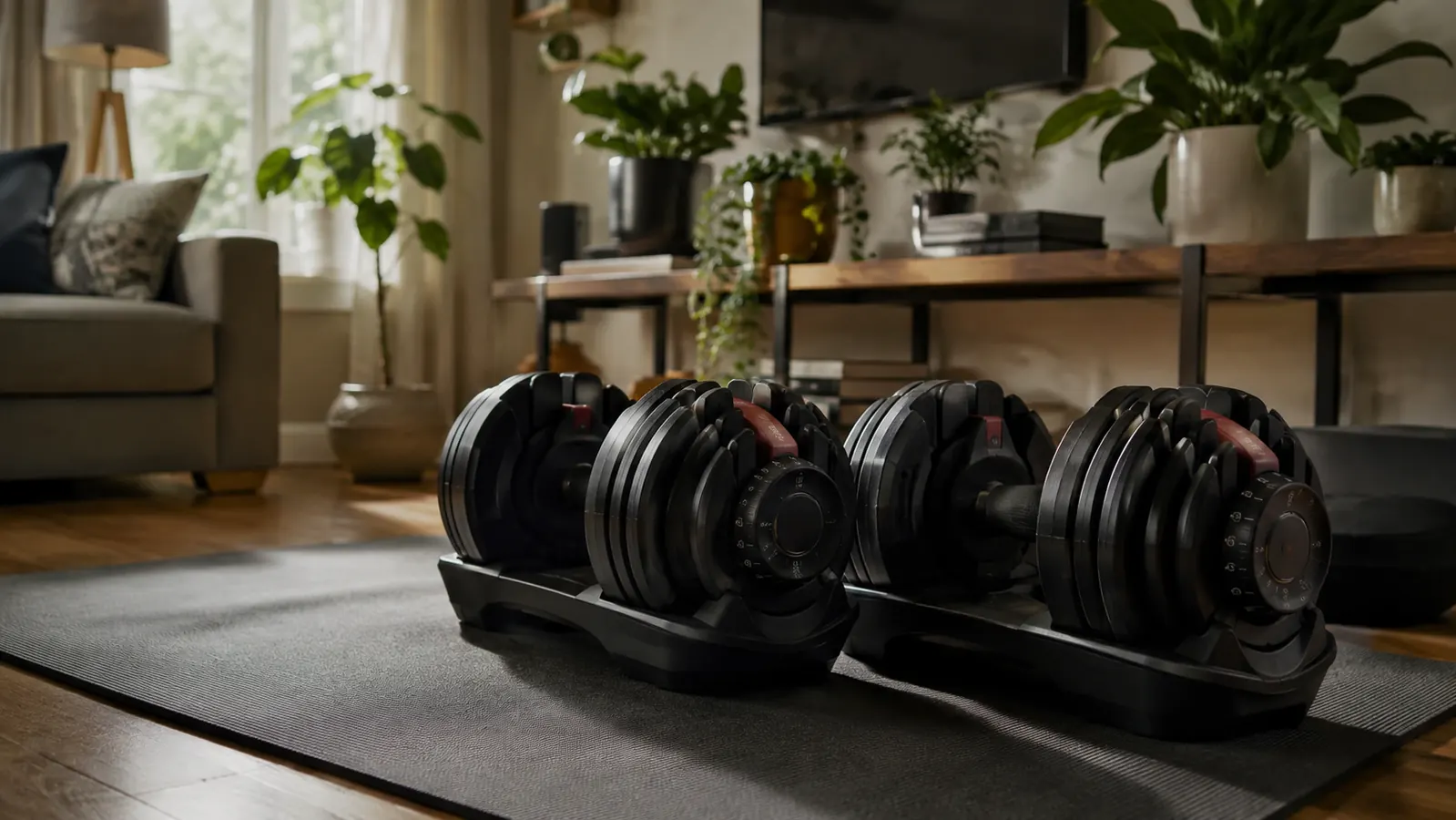
You finally clear a corner of the living room to start working out at home. You look at adjustable dumbbells online and every budget set has reviews that say things like "good for the price" or "not bad for a budget set." That is code. What nobody says directly is whether you can actually build muscle with them, whether they will fall apart in six months, or whether you are better off saving for the expensive quick-change kind. I bought the CAP Barbell Adjustable Dumbbell Weight Set to find out, because I do all my training in a 6-by-8-foot section of my living room and I cannot justify spending that much on dumbbells.
Here is the short version before I get into the details. This set gives you real cast-iron weight from about 5 pounds up to 52.5 pounds per hand for a fair price. The catch is the weight adjustment uses old-school spin-lock threading, not a quick-change dial or pin system. That difference in how you change weight matters a lot for how you actually use these day to day. I have been rotating this set through my home strength sessions for a few months and I have a clear picture of who should buy them and who will find the spin-lock system frustrating every single workout.
The Quick Verdict
The CAP Barbell adjustable set is the best value option for home strength training, but only if your workouts do not require fast weight changes between sets. The threaded collars hold securely and the iron plates are honest for the price. If you superset exercises or need to drop weight quickly mid-workout, the spin-lock system will frustrate you every session.
Amazon Check Today's Price →Need real dumbbells without the quick-change price tag?
The CAP Barbell set gives you 52.5 pounds per hand with solid iron plates at a price that leaves room for a mat, a bench, or anything else your home setup still needs.
Amazon Check Today's Price on Amazon →How I Tested These Dumbbells
I did not run controlled lab tests. I used them the way a person actually uses dumbbells at home. That means three to four strength sessions a week in my living room on a mat, with a cheap folding bench I picked up secondhand. I ran through full-body workouts, push-pull splits, and lighter days where I just did a few sets between helping my wife with morning care tasks. My goal was to find out whether these dumbbells hold up when training is squeezed into real life, not a dedicated gym schedule.
I tested the full weight range from the lowest setting at roughly 5 pounds per hand for shoulder prehab and light isolation work, all the way up to the maximum of about 52.5 pounds per hand for heavy pressing and rows. I changed the weight between nearly every set, sometimes intentionally timing how long each adjustment took. I dropped one of the fully loaded dumbbells from about knee height onto the mat to see how the collars and plates held up to an impact. I also left the set sitting in a corner of the living room for a couple of weeks without touching it to check whether any rust or corrosion appeared in a non-climate-controlled space.
I weigh 185 pounds and I have been training at home for years, so I am not a beginner going in. I knew going into this that 52.5 pounds per hand would cover most of my upper-body work but would fall short on legs and heavy back work. That is the honest ceiling of this set, and it is the single biggest thing nobody tells you about budget adjustable dumbbells. You are buying a tool that works great for curls, presses, rows, and raises, but it will not replace a barbell for squats or heavy deadlifts.
Build Quality: What You Actually Get for the Price
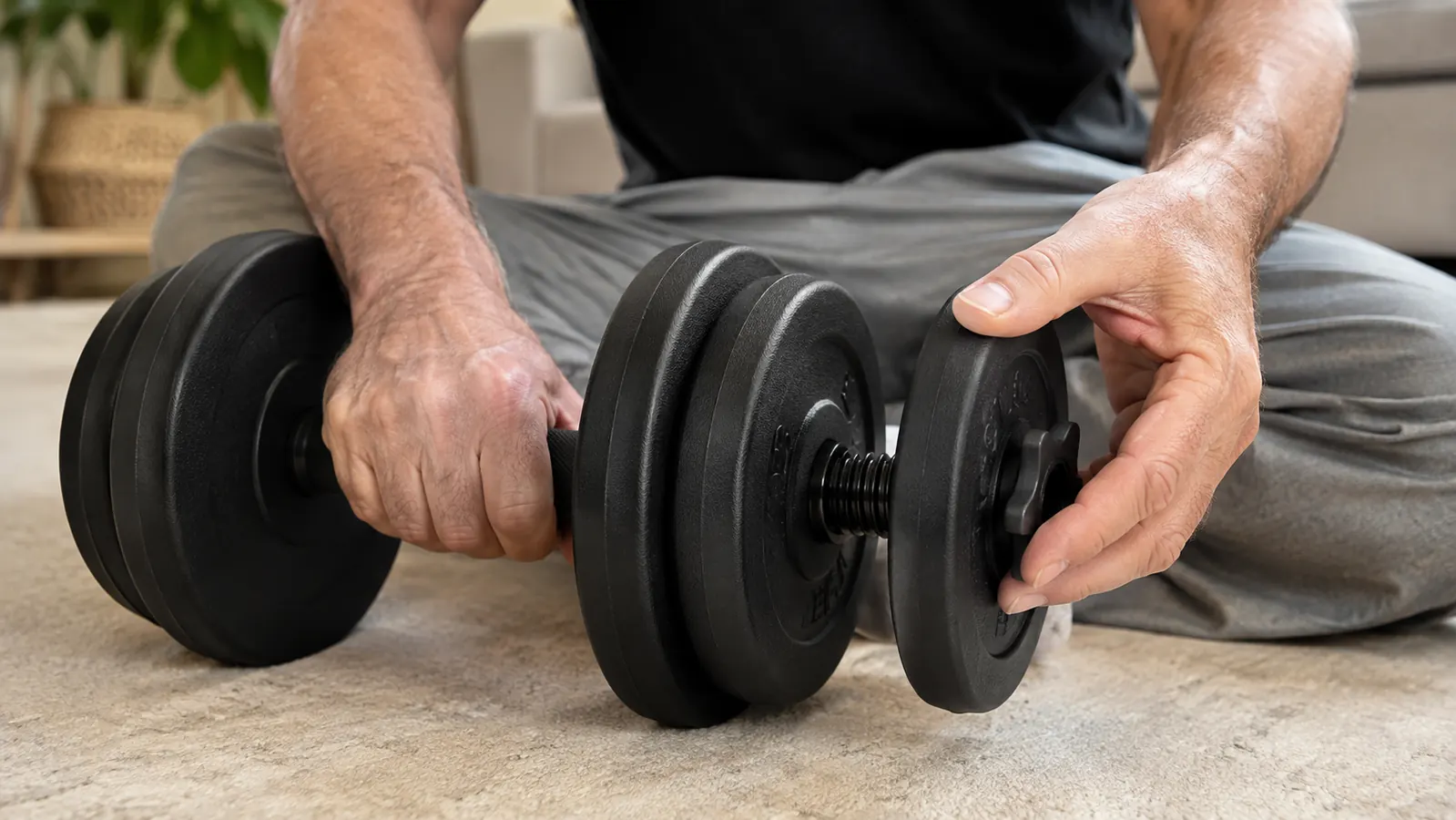
The CAP set comes with two steel handles, four spin-lock collars, and eight cast-iron plates. Each side gets four plates: two 5-pound plates and two 7.5-pound plates, plus the weight of the handle itself. The plates are coated in a black painted finish that looks acceptable straight out of the box. The handles have knurling in the center section where your hands grip during pressing and rowing movements.
Here is what nobody tells you about the finish. The paint on the plates scrapes off where they rub against each other and where the collars tighten down. After a few weeks of regular use, the plates on my set have bare metal spots on the edges and around the center holes. This is purely cosmetic. It does not affect how the dumbbells work and it does not leave rust on your hands in a dry indoor environment. But if you are the kind of person who wants gear to stay looking new, this will bother you, and there is no way to prevent it. The plates rub against each other every time you change weight.
The knurling is present but mild. It gives you enough texture to hold the handle securely during a heavy set of rows or overhead press, but it will not tear up your hands the way aggressive knurling on a gym barbell does. For home use I actually prefer it this way. I am not wearing chalk or lifting straps in my living room. The collars themselves are basic stamped steel with a chrome-like finish. They thread smoothly once you work the initial stiffness out of the threads during that first assembly.
One thing that surprised me was how much shipping grease the threaded handles arrive covered in. Every handle I received had a heavy coating of what looks like light machine oil mixed with black residue from the threading process. Wiping it off with a rag before the first use is mandatory, because the grease picks up dust and grit and turns into a grimy paste on the threads over time. This is not a defect. It is just something you need to plan for when the box arrives.
The plates themselves are solid cast iron with a painted finish that will scuff where they rub against each other. That cosmetic wear is not a defect. It is what happens when painted metal rubs against painted metal, and it has zero effect on how much weight you lift.
The Spin-Lock System: The Real Tradeoff Nobody Spells Out
This is the part where most budget dumbbell reviews get vague. The CAP set uses a threaded spin-lock collar on each end of the handle. You screw the collar onto the threads, it presses the plates together, and friction holds everything in place during your set. The system works. The collars on my set have never loosened during a rep, even during overhead pressing or more dynamic movements like cleans or snatches at moderate weight.
The tradeoff is time. Changing weight on a spin-lock dumbbell means unscrewing the collar all the way off, sliding plates off or on, then screwing the collar back down finger-tight. For a single weight change between two exercises, you are looking at about twenty seconds per dumbbell if you are efficient, closer to thirty seconds if you are being careful with alignment. If you superset upper and lower body movements and need to go from 50 pounds to 20 pounds between sets, that is a full minute of turning collars before your next set starts.
How much this bothers you depends entirely on your workout style. If you do straight sets with a rest period between exercises, the spin-lock pace is fine. You change the weight during your rest, count it as part of your recovery, and move on. If you do circuit training, supersets, timed intervals, or drop sets where the weight changes multiple times within a single block of work, the threading will drive you crazy by the third round.
I have found a workaround that helps. I put the heavier plates on both handles before I start and leave them there throughout the workout. If my session has an overhead press at 45 pounds followed by lateral raises at 15 pounds, I set both handles up at 15 pounds first, do the raises, then add plates for the press. I add plates more often than I remove them, working upward in weight through the session instead of down. This cuts the adjustment time roughly in half because adding plates is faster than removing them and re-threading the collar.
Weight Range and the Strength Ceiling
The maximum weight per dumbbell with this set lands around 52.5 pounds. That comes from stacking all four plates on each end of the handle plus the weight of the handle itself. For a typical home exerciser doing curls, presses, rows, and lateral isolation work, that range covers nearly everything for the first year or two of consistent training.
Here is where the ceiling shows up. A reasonably fit man doing bent-over rows or flat bench press at home will outgrow 52.5 pounds per hand within a few months if he trains consistently. Squats and stiff-legged deadlifts with dumbbells become too light even sooner. The CAP set can handle almost all upper-body isolation work and moderate compound pressing, but it will max out on lower-body and heavy back work before you are ready to stop progressing.
The honest evaluation is this. Most people buying their first home dumbbell set do not need more than 50 pounds per hand for a long time. A typical bicep curl is done at 20 to 30 pounds. Lateral raises live at 10 to 20 pounds. Triceps extensions top out around 30 to 40 pounds. Even bench pressing with dumbbells stays under 50 pounds per hand for most men during the first six months of consistent training. The CAP set gives you room to grow into the weight before you hit the ceiling. By the time you truly need 60-plus pounds per hand, you will know exactly what kind of equipment you want to buy next and this set has already paid for itself several times over.
What Nobody Tells You About Assembly and Storage
The dumbbells arrive fully disassembled in a plain cardboard box. There is no foam insert, no tray, no organized layout. Every plate is wrapped in thin plastic sheeting and packed with foam peanuts. Assembly means taking everything out, wiping the shipping grease off the threaded handles, and threading the collars on and off a few times to work the initial stiffness out of the threads. Plan for about twenty minutes of setup time. It is straightforward but it is worth knowing that your first experience with these will be unwrapping and stacking plates on the floor, not lifting them.
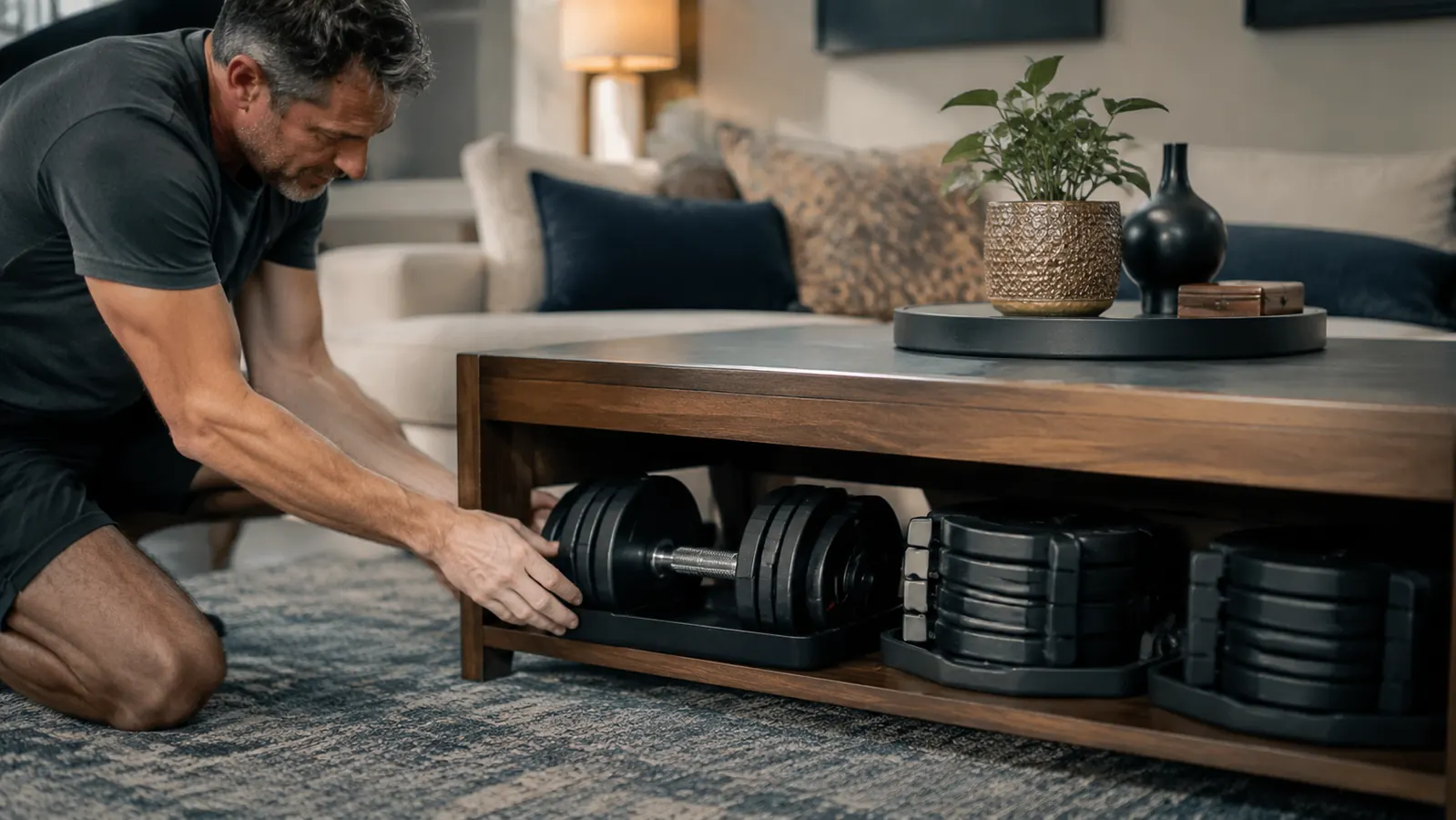
The other thing nobody mentions is storage. There is no included tray, rack, or stand. The plates sit loose on your floor or in a corner when they are not on the handles. I keep mine stacked in a small plastic storage bin next to my exercise mat and it works fine. The handles themselves are compact enough to toss in a closet or under a bed. If you are the kind of person who wants everything organized in a dedicated rack, budget a bit extra for a basic adjustable dumbbell stand. You can find third-party trays on Amazon that hold spin-lock plates neatly.
Durability Concerns and Long-Term Wear
After a few months of regular use, my set shows honest wear. The paint has flaked off the edges of most plates where they contact each other. The bare cast iron underneath has developed a light surface patina but no rust, and I live in a humid climate near the coast. The knurling on the handles is unchanged. The collars still thread smoothly and hold tight during every set.
The one long-term concern I have is the potential for the threaded handles to wear down over years of frequent weight changes. The threads are cut into what feels like mild steel, and plastic or brass collar inserts would have been better for longevity. For the price point, this is not a reasonable complaint. At this price, using these three times a week for three years works out to almost nothing per workout. If the threads wear out after that, you have gotten your money's worth many times over.
What I Liked
- Real cast-iron plates at about one fifth the cost of quick-change adjustable dumbbells
- 52.5 pounds per hand covers most upper-body needs for the first year of home training
- Knurled handles provide solid grip without being abrasive on bare hands
- Spin-lock collars hold tight during use without loosening during dynamic movements
- Compact storage footprint compared to a full rack of fixed dumbbells
- Paint finish and hardware are honest for the price, no false promises of premium construction
Where It Falls Short
- Weight changes are slow. The spin-lock system takes 20 to 30 seconds per dumbbell per change
- Paint on plates scuffs and chips with regular use, exposing bare metal edges
- No storage tray or rack included, plates sit loose on the floor
- Maximum weight of 52.5 pounds per hand limits leg and heavy back work
- Initial assembly requires wiping heavy shipping grease off threaded handles
- Not suitable for circuit training, supersets, or drop sets requiring rapid weight changes
Who This Is For
These dumbbells are for the person setting up their first real home strength area on a tight budget. If you are a beginner or intermediate lifter who does straight sets at a steady pace with rest periods between exercises, the CAP set gives you everything you need for a solid upper-body and light lower-body routine. The spin-lock pace will not bother you because you are already resting between sets and changing weight fits naturally into that rhythm.
They are also for anyone with limited floor space. A full set of fixed dumbbells from 5 to 50 pounds takes up a whole corner of a room and costs several times as much. This set lives in a small bin on a shelf and goes from light isolation work up to moderate compound pressing without multiplying your footprint. For someone training in a shared living room where the workout area doubles as a seating area most of the day, that compact storage is the difference between having home gym equipment and having a pile of gear that takes over the room.
Who Should Skip It
Skip these if you do circuit training, HIIT with dumbbells, or any training style where the weight changes multiple times within a single workout block. The spin-lock collars will frustrate you between every round and you will eventually stop changing the weight, which defeats the purpose of an adjustable set. In that case, save for a quick-change system like the Bowflex SelectTech or PowerBlock sets that let you dial in a new weight in seconds.
Skip them if you already know you need more than 55 pounds per hand for lower-body work or heavy rows. You would be better off buying a pair of heavy fixed dumbbells in the 60-to-80-pound range or investing in a barbell and plate setup. The CAP set will max out on you within a few months and you will be shopping for an upgrade while your home gym floor space is already taken up by plates you have outgrown.
Skip them if you value pristine aesthetics. If the idea of paint flaking off your gym equipment bothers you, the CAP set will disappoint. The plates are fully functional and the performance is solid, but they do not look premium and they will not stay looking like new. That visual wear is the tradeoff for paying a fraction of what premium adjustable dumbbells cost.
The bottom line on the CAP Barbell adjustable set
For the money, you get real iron weight, functional knurling, and enough resistance to build noticeable strength at home. The spin-lock system asks you to slow down between exercises. If that pacing fits your life, this is the best value adjustable dumbbell set I have tested.
Amazon Check Today's Price on Amazon →